







Did you know that over 37 million Americans suffer from kidney disease, and many of them don't even know it? Today we're going to go into some simple actionable steps you can take to improve or reverse your low kidney function. We're going to use some of my clinical experience and understanding of what causes low kidney function to deliver some lifestyle tips, some ideas around what optimal kidney function is, understanding why you have low kidney function if you do have low kidney function, and some lifestyle, diet, exercise and a few supplements you can take that research suggests may improve your low or declining kidney function.
How Kidney Function Is Measured
Today we're going to be diving into some simple actionable steps that you can do to improve or reverse your low kidney function. But you do have to be mindful of how severe your kidney function is, and make sure you're running these things through your doctor, make sure they know what you're taking and doing. The worse your kidney function is, the more things you put into your body, sometimes things can get worse.
With that in mind, before we jump into the things you can do to reverse low kidney function, I want to touch briefly on what normal kidney function is and how it's measured. The measurement of kidney function is usually done by two primary tests. One is called the creatinine test, which gives you an estimated GFR, and the other one, which is lesser known, less commonly run, is called cystatin C.
Creatinine is the waste product from muscle metabolism, and high levels indicate a poor or low kidney function, because the kidneys aren't filtering it out, it's building up in your body. So the optimal range for creatinine is actually the lower the better, but the optimal is going to be around 0.6 to 1.2 mg per deciliter. Now there are some other things to note about this too. It's going to change with size, it's going to change whether you're male or female, and some other things that I've gone into in other videos, so I won't review that here.
But because there is so much variability in the creatinine, and sometimes it can change from one day to the next based on something as simple as how well hydrated you are or whether or not you exercise, there are alternative tests, one of which is called cystatin C, and this can give you a more accurate assessment with less variability for your kidney function. Still, the optimal GFR that you're going to want to go for is still going to be around that 80 to 90 mark or above.
Look At The Consistency Of Your Tests
So keep that in mind, more so on the consistency of your test. One test may jump out as an outlier and say, oh, there's a problem. Another test may show, oh, everything's fine. And as long as you're getting, for the most part, normal kidney function levels, it's not really something to be worried about. But if you're getting over the years declining, declining, declining, and it's not bouncing back up, that's when you know you might have a problem, and you might want to implement some of these strategies or look at what could be impacting your kidneys to create this lower kidney function.
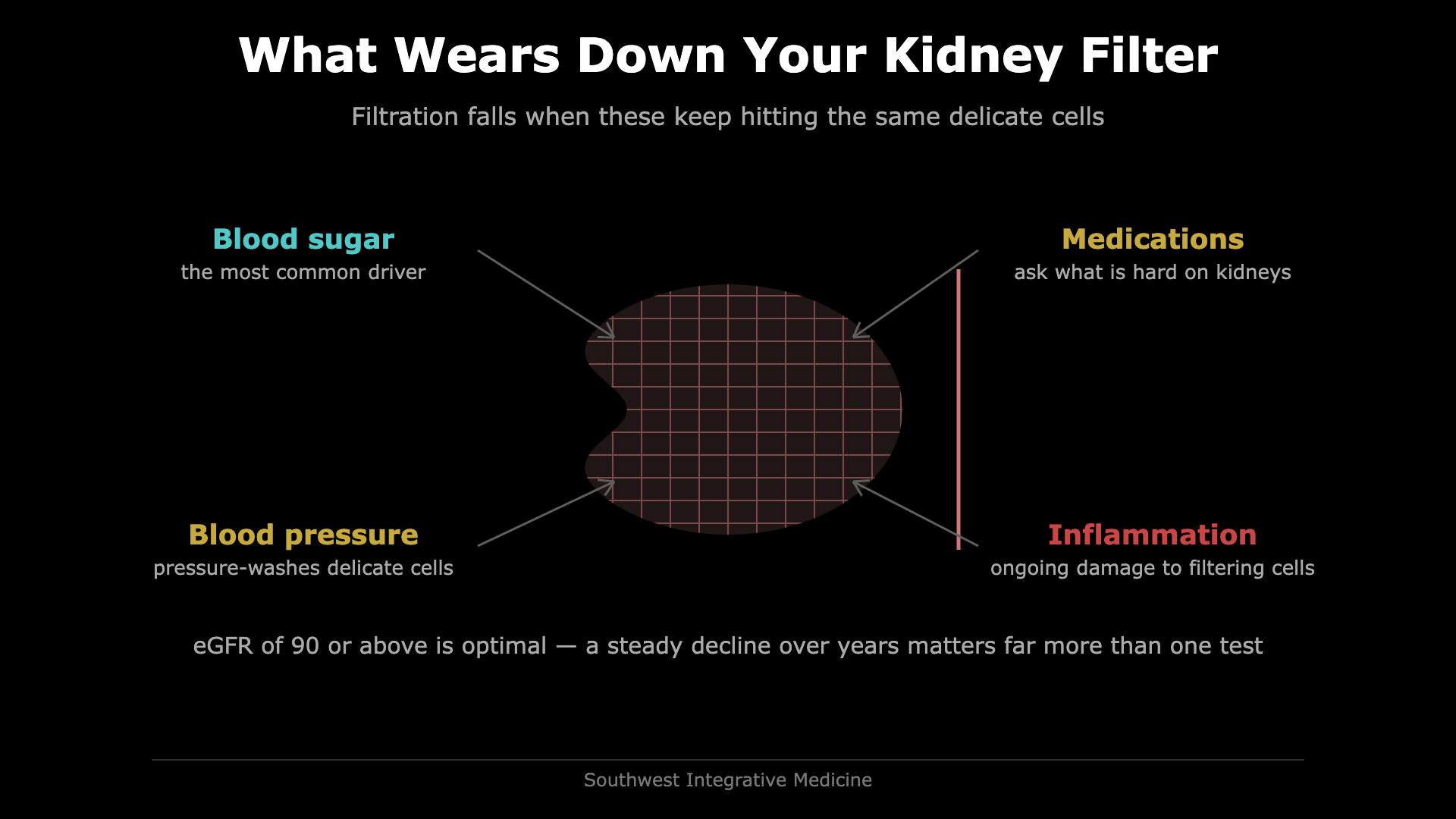
Remember, your kidneys are filtering waste, so the more efficient that is, the less waste products are going to be circulating around in your body. So an estimated GFR of 90 or higher is going to be normal or optimal kidney function. As it starts to slip below that 80 to 90 mark, there may be an indication of mild or decreased kidney function. That's when you want to be more alert and diligent about what's going on in your body. Now again, one test wouldn't necessarily say, oh, looks like you have some declining kidney function.
And as we get older the kidney function is going to decline more and more, because basically what's happening is you're exposed to more inflammatory things that are going to potentially damage the cells that are responsible for the filtration process. You can think of the mechanism of kidney filtration kind of like a vacuum, and as that vacuum process is no longer able to occur, the filtration process goes down. Instead of things getting sucked into the filtration process, they just keep going around in the blood and less stuff gets filtered. And so that's why it's important to be mindful of some of these lifestyle things that we're going to discuss.
Specific Contributors To The Damage
So let's look at some specific contributors to that damage or decreased filtration process, so you can better understand how to decrease the burden on your body and possibly reverse your low kidney function.
There are multiple things that can contribute to decreased kidney function, but there are three, possibly four, that are kind of high up on the list. And the first thing that I think about when my patients have decreased kidney function is, is their blood pressure good and normal, and is their blood sugar good and normal? And sometimes this can be more difficult to assess when we're just doing a simple blood test every six months, three months, because you're not capturing the day-to-day rises and falls in both the blood pressure and the blood sugar. And so the diagnosis of what's causing these problems is also essential to understanding this. Medications and inflammation are another key variable to consider, and we'll look at some things you can do for that as well.
Blood Sugar
So when we're thinking about how to reverse low kidney function, the key thing is to first understand what is causing your decreased kidney function, and first and foremost is getting multiple tests that show that decline in kidney function. So if you already have that, blood sugar is probably one of the most common reasons for this, followed by blood pressure.
When you have improved glycemic control you have less damage to those kidney cells, and we know that blood sugar is a major contributor to decreased kidney function because diabetes is one of the most common causes of chronic kidney disease. Now you don't have to have actual overt diabetes in order to start having problems with your kidneys. So having a more even blood sugar is going to keep the insult to those kidney cells lower. And remember, the more damage or inflammation that's occurring to those kidney cells, the more likely you are to have problems with those kidney cells and decreased kidney function.
So diet and exercise are the main things that you can do to improve your glycemic control. You can also wear a continuous glucose monitor to see if you're having higher than normal peaks, to see if that may be an additional contributor to your decreased kidney function. Now improving your blood sugar control sometimes can take months or even years to get to more of that optimal state, and with that you're also going to see a slow improvement in your kidney function as well. So don't expect to see a change overnight, unless you just had some kind of fluke decline in your last kidney function test.
And just to put another finer point on what's happening with the kidneys, the hemoglobin A1c is a measurement of the amount of glycation that's happening to the protein on the hemoglobin molecule. So the more of that that's occurring, the more high blood sugar you have, and that's basically damage that's occurring to that hemoglobin molecule. So the same thing could be happening inside the cells of the kidney, that's damaging those kidney cells. So the higher your A1c, the more likely you have a problem like this occurring in your kidney cells, kidney tissue as well. But you don't necessarily need to have a high A1c to have this problem.
Blood Pressure
Okay, moving on to blood pressure. We know that high blood pressure can damage kidneys as well. You can think of this more like a pressurized effect on those kidney cells. When you're pressure washing something, or the pressure that happens with each step that you take, you start to build up a callus, or using your hands a lot you start to get calluses, that same kind of pressure, high pressure environment in those kidney cells, which are very delicate, can lead to some kind of callousing effect there and reduce their ability to filter that blood.
When you have super high elevated blood pressure you don't want to necessarily drop it too quickly, but you do want to get your blood pressure reading down to around 120 over 80, or perhaps even lower than that. With intensive interventions at lowering your blood pressure when it's elevated, you can also see a marked improvement in your function over the short and long term, short meaning months, long term meaning years. This can be achieved by taking medications, and I've also gone into a lot more detail in some other videos on how to optimize your blood pressure.
When you're having ongoing blood pressure issues, again, it can go back to some of the dietary things that we just mentioned, low carb, low glycemic index foods, which are going to lead to more even blood sugar. And also exercising more regularly is going to allow those arteries to be more responsive and dynamic to the need for higher pressure at different times. It's going to allow your blood to be able to get diffused to where it's needed without necessarily pressuring those arteries too much.
And remember, it's not always just about doing the right things and putting it on autopilot. You also have to test to make sure these interventions are actually working. Testing is always essential to make sure you're on the right track.
NAC
So now I want to talk a little bit about some supplements you can use to reverse low kidney function. N-acetylcysteine is something that's used in a lot of different areas in our body, and that's because NAC, or N-acetylcysteine, is used to make a very important thing in our bodies called glutathione.
Research has shown that patients that receive contrast to do some kind of imaging study, and have subsequently had decreased kidney function, taking NAC actually helped raise or improve their creatinine clearance. Other research has shown that NAC can improve the outcome in transplant patients that are undergoing kidney transplant, their ultimate kidney function that results from that transplant. Other studies looking at stage three chronic kidney disease didn't show an improvement in creatinine clearance after taking NAC.
So NAC may have some upside potential, and I think it has very little downside. It may not always work. I think it depends what the ultimate mechanism of action on why you have decreased kidney function. If you're having ongoing high blood pressure, NAC may not be the right thing for you. If you have decreased kidney function due to inflammatory reasons, or if you have decreased glutathione levels for other reasons, NAC may be the right thing. So it's important to, again, diagnose and figure out why you have this problem first, and then some of these things may be more effective.
Vitamin E
Vitamin E is another supplement that's shown some promise in decreased kidney function. Supplementing with vitamin E normalized creatinine clearance in patients with diabetes, suggesting that that antioxidant effect may be helpful to improve kidney function in diabetic patients, and this was in one study.
Putting It Together
Now I mentioned some lifestyle things above, but regular exercise, and making sure your tissues are getting perfused or able to dilate and move throughout your body, and especially that the kidneys are getting what they need, is going to be crucial to optimizing your kidney function.
So decreasing inflammation by optimizing your diet, decreasing your blood pressure through exercise, diet or medications, is going to reduce the impact, the negative impact, on those kidney cells. And maybe some NAC or glutathione support and vitamin E all may be helpful for helping you reverse your low kidney function. It's important to remember though, the diagnosis is the most essential part. Without the diagnosis you're kind of just shooting in the dark.
If your kidney numbers have been slowly declining and you want help figuring out why, schedule an appointment and we can build a plan around your specific situation.
Topics: Kidney Function, Creatinine, eGFR, Cystatin C, Blood Sugar, Blood Pressure, NAC
.jpg)