"My weight was getting so out of control. I started their weigh loss diet program and lost 32 lbs! I have been able to reduce my blood pressure medicine, fit back in my clothes, have tons more energy... Now I am back to eating and my desire for foods has changes drastically. Saved my life!!! Pamela, Scottsdale Az
"Dr. Cline and Dr. Terranella have been amazing! For the first time we found doctors that actually listen. They care about how your feeling and try everything they can to get you back to a normal state. I am in love with these guys! If you want amazing care, see these guys." Jennifer F. ,Phoenix Az
Do you have ongoing elevations in your vitamin B12 level? Maybe you're concerned about whether or not you might have cancer or some other bone marrow problem. In this post we'll go into the most common cancers and bone marrow disorders associated with elevated B12, what to test for, and how to think about your levels.
I hesitate to write something like this because in the vast majority of people, high B12 is from a benign cause. A post like this can create unnecessary fear. Still, I'd rather help someone get an earlier diagnosis if it's relevant — so let's go through the worst-case-scenario possibilities.
The Benign Reasons First
Before we get into the more concerning causes, the benign reasons for high B12 are: you're taking vitamin B12 (injection, oral, or even an energy drink with B12), or there's a genetic reason — variants in the transcobalamin molecules or other genetic aspects that elevate the lab number without anything wrong.
The problem is when neither of those applies. If you haven't taken any B12 in years and your level is still high, that's when you want to make sure something more serious isn't going on.
How High B12 Connects To Bone Marrow Disorders
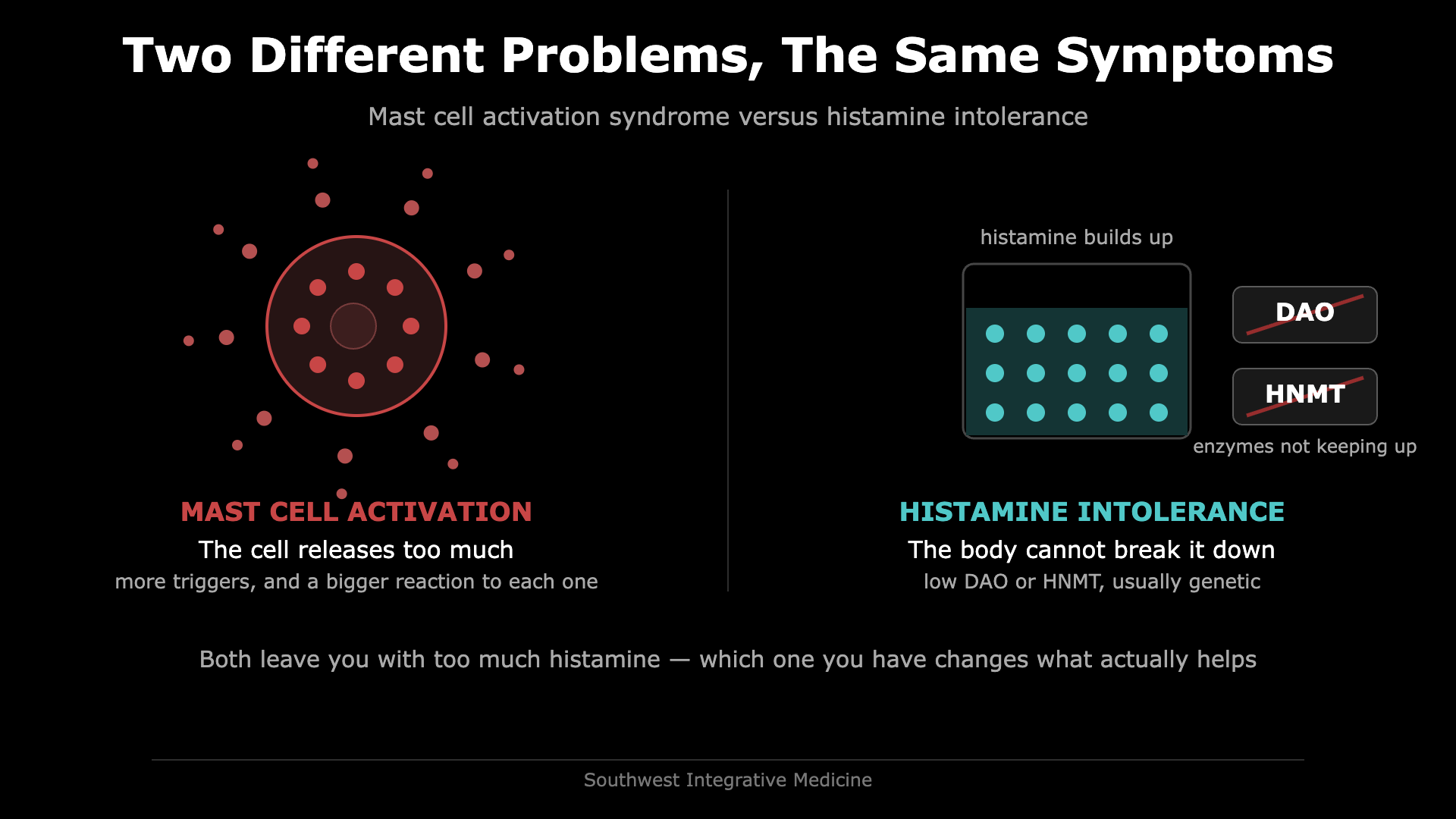
B12 is carried throughout the body by three carrier proteins called transcobalamins. They're made in the liver and also in white blood cells called granulocytes. When white blood cell numbers go up — which happens in conditions like mast cell activation syndrome, mastocytosis, and white blood cell cancers — you get more transcobalamin in circulation. More transcobalamin means more B12 floating around in the blood (less of it actually getting into cells), which spikes the lab number.
Cancers And Bone Marrow Disorders Associated With High B12
The well-documented bone marrow disorders that can drive elevated B12 include:
The relative amount of B12 in the blood reflects how much transcobalamin is being produced. With chronic myeloid leukemia, B12 levels can be as much as ten times the normal level. With polycythemia vera or primary myelofibrosis, elevated B12 may only be seen in about a third of cases.
Mast cell conditions — MCAS and mastocytosis — can also drive B12 up via the same transcobalamin-from-granulocytes mechanism, as can chronic infections that trigger mast cell proliferation.
How To Read The Numbers
One thing to know about B12 testing: most labs don't measure beyond 2000 pg/mL. So if your level is "10 or 20 times normal," you typically can't actually quantify how high it is from the lab report alone — it just reads as ">2000."
The threshold where I think it becomes meaningful is above 1300 pg/mL — and especially when you've seen that level on more than one test. The persistence of the elevation matters more than a one-off high reading.
You can't use a high B12 alone as an indicator of cancer. But the higher it is and the more times it's been confirmed, the more concern there should be about exploring the bone marrow side of things.
What To Test
The first practical step is a CBC (complete blood count) with differential, which looks at all your white blood cells. Sometimes the abnormality shows up there. Sometimes it doesn't.
If you have ongoing high levels and you're not supplementing, scheduling with a hematologist for deeper workup — including bone marrow analysis if indicated — is the right next step. They can do testing well beyond what a video or blog post can describe.
Other relevant workup includes liver enzymes and kidney function — both can affect B12 metabolism and clearance.
Conclusion
Most cases of elevated B12 are benign — supplementation or a genetic transcobalamin variant. But when B12 stays elevated without an obvious benign cause, particularly above 1300 pg/mL on more than one test, it warrants a deeper look at white blood cells and bone marrow function. The connection isn't that B12 causes cancer — it's that elevated transcobalamin from white blood cell expansion drives the lab number up.
For a more detailed action plan on high B12 — including how to actually lower it — my book "Don't B12 Deficient" (affiliate link) goes into it. If you've got persistently high B12 and want help mapping out the right workup, work with me directly.