"My weight was getting so out of control. I started their weigh loss diet program and lost 32 lbs! I have been able to reduce my blood pressure medicine, fit back in my clothes, have tons more energy... Now I am back to eating and my desire for foods has changes drastically. Saved my life!!! Pamela, Scottsdale Az
"Dr. Cline and Dr. Terranella have been amazing! For the first time we found doctors that actually listen. They care about how your feeling and try everything they can to get you back to a normal state. I am in love with these guys! If you want amazing care, see these guys." Jennifer F. ,Phoenix Az
If your blood work came back showing a high AST while your ALT looks normal, it's natural to assume something is wrong with your liver. Often, it isn't. AST and ALT are both commonly called liver enzymes, but they aren't quite the same, and the gap between them tells a story. In this post we'll look at what's actually going on when AST is high but ALT is normal, the most likely cause, and when the pattern points to something that does need attention.
AST And ALT, The Basics
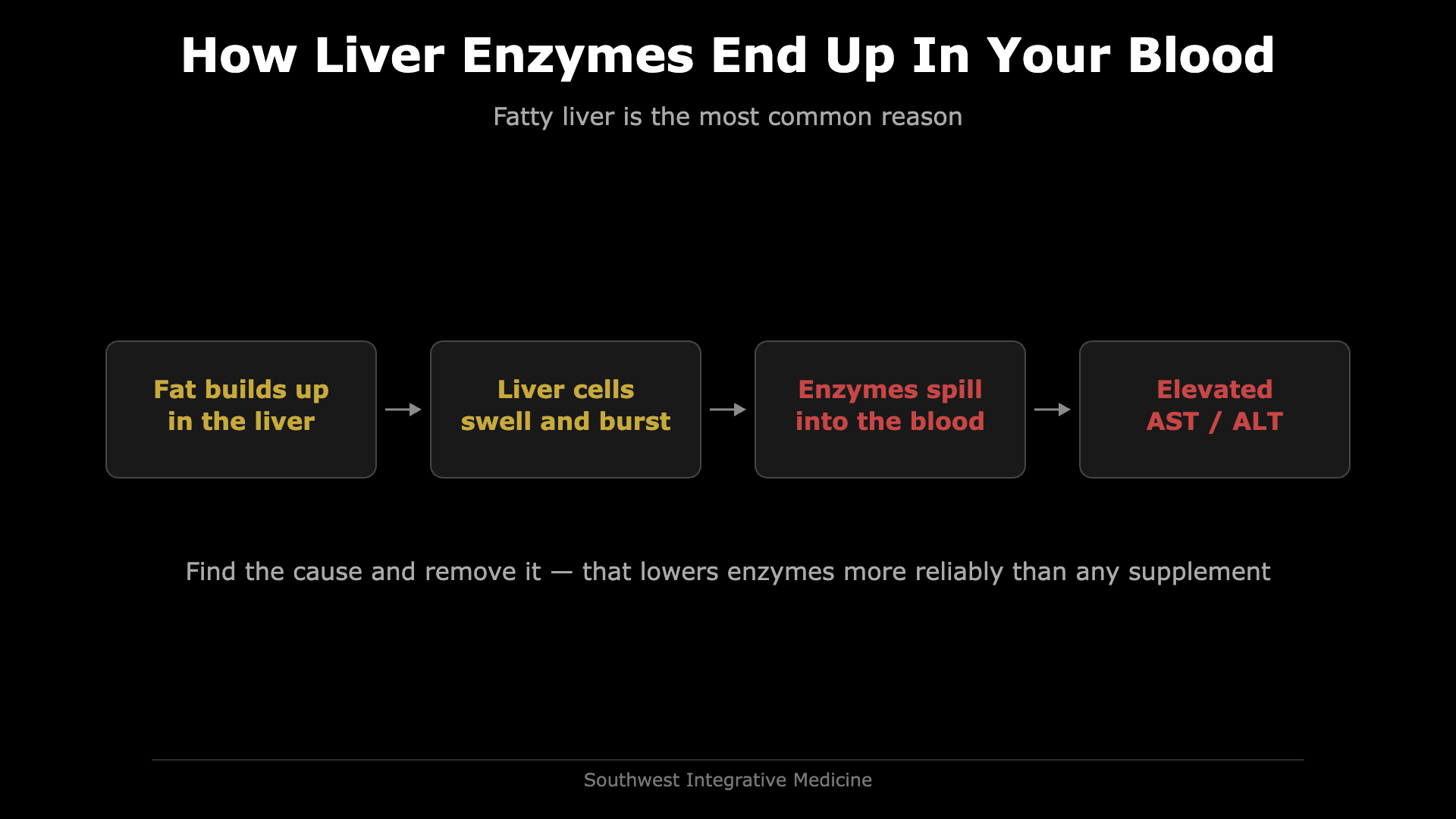
AST stands for aspartate aminotransferase, and ALT stands for alanine aminotransferase. Both are enzymes commonly measured on blood tests to evaluate liver function. When a cell is damaged or injured, by a toxin, by too much alcohol, or by other causes, it bursts open and releases these enzymes into the bloodstream. That's why liver damage shows up as elevated liver enzyme values on a blood test.
Why AST Is Different
Here's the key detail that explains the whole pattern. AST is not found only in the liver. It's also present in other tissues, including the kidney, the heart, and skeletal muscle. ALT is much more specific to the liver.
So when AST is high but ALT is normal, depending on how low or normal that ALT actually is, the elevation may be coming from one of those other tissues rather than the liver itself. And importantly, it isn't always a problem at all.
The Most Common Cause Is Muscle
The first and most likely explanation for a high AST with a normal ALT is muscle damage, usually from exercise. Every time you exercise, you damage your muscles to some degree. The more intense the workout, the more of that damage occurs. Those muscle cells burst open and spill AST into the bloodstream, and then it shows up on your labs.
A useful rule of thumb from the video: if your AST is genuinely high and your ALT is pretty much normal, under about 25, then muscle is most likely the source. This is why timing matters so much, and why a hard workout in the days before a blood draw is worth mentioning to your doctor. I've covered this specific connection in more depth in can exercise affect liver enzymes.
The Other Possibilities
Muscle isn't the only source. Because AST also lives in the kidney and heart, problems with those organs can raise it too. The helpful part is that those problems usually don't show up alone. A kidney issue would more than likely come with other kidney-related signs, such as a high creatinine. A heart issue would tend to come with other elevated cardiac markers. No single test gives you 100 percent certainty, but the surrounding labs usually point you in the right direction.
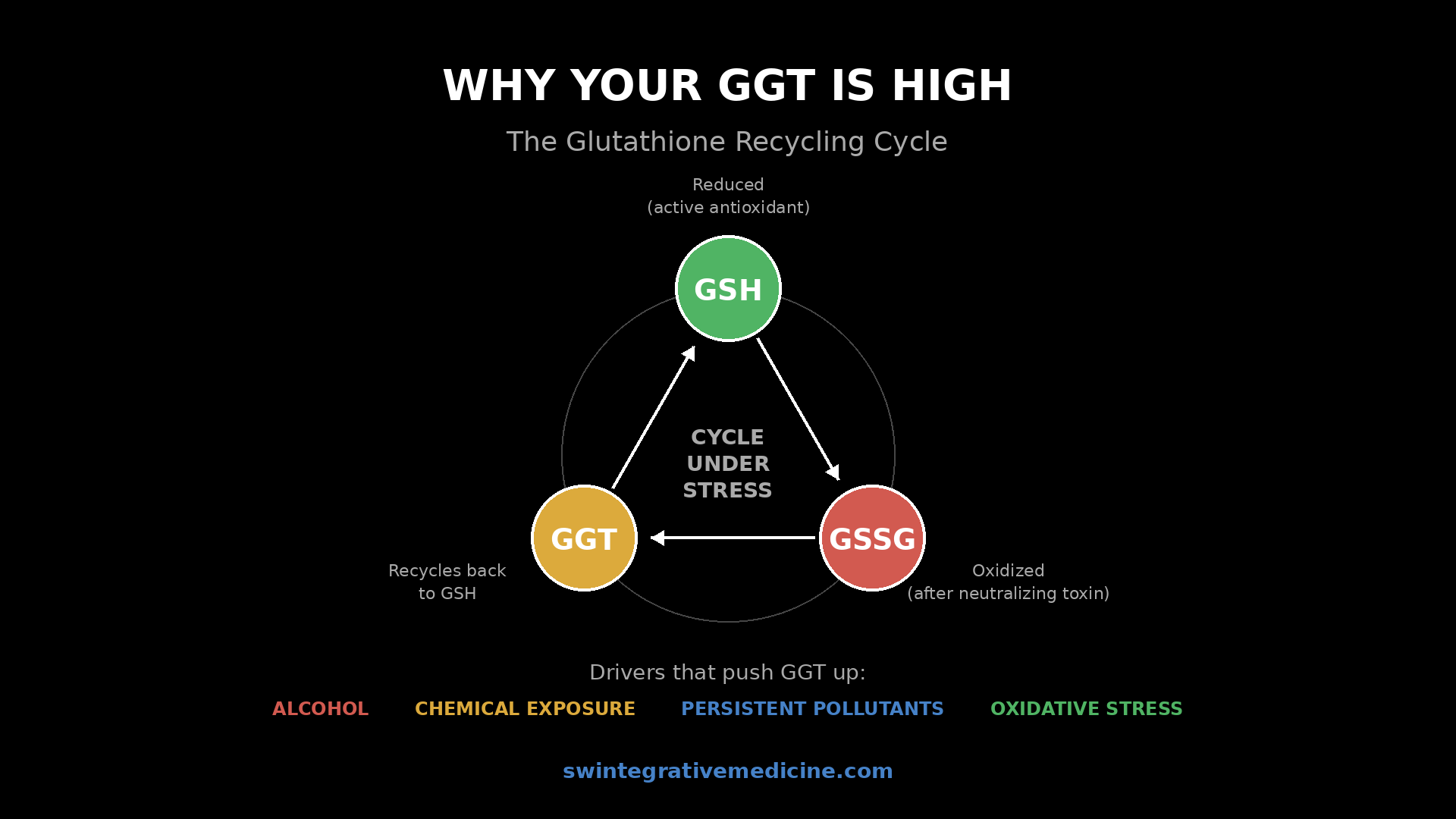
And of course AST can come from the liver itself. Alcohol use is one of the more common reasons for liver-related AST elevation. But when alcohol is the cause, the AST elevation is usually accompanied by a corresponding rise in ALT, and often GGT as well. So an isolated high AST with a normal ALT and normal GGT argues against the liver being the source. If your liver enzymes as a group are elevated, that's a different conversation, and worth reading how to lower liver enzymes naturally and the post on GGT and the glutathione connection.
What To Do About It
If you have a high AST with a normal ALT, the calm interpretation is that it may simply be from exercising. But don't just assume that. It's only a safe assumption if the timeline matches a recent hard workout and you have no other reason to suspect your liver, kidneys, or heart. Whatever the suspected cause, the smart move is the same: get a second, follow-up test once you're well away from the exercise or whatever else might be the culprit. That tells you whether the elevation is a one-off or something ongoing.
Bottom Line
A high AST with a normal ALT usually points away from the liver, not toward it, because AST also comes from muscle, kidney, and heart. Far and away the most common cause is muscle damage from exercise. Look at the rest of your labs for clues, consider your recent activity, and repeat the test under calmer conditions to confirm what's really going on.
When liver enzymes are genuinely elevated, glutathione is one of the supplements I most often use to support liver detoxification. Here's the one I use with patients (affiliate link). Or work with me directly to build a plan around your specific labs.