








What Does It Mean If Your MCV Blood Test Is High?
If you're looking at your blood test and noticing that your MCV is above the reference range, you probably want to know what that actually means and what's driving it. MCV (mean corpuscular volume) is a measurement on your CBC that gets overlooked a lot, but it can be a useful early signal of nutrient deficiencies, genetic variants, or other things going on inside the body. In this guide, we'll break down what MCV is, what an elevated MCV is telling you, and what to do about it.
What Is MCV?
MCV stands for mean corpuscular volume. It's a blood test that measures the relative size, or average volume, of your red blood cells (erythrocytes). A red blood cell is referred to as a corpuscle, which is where "corpuscular" comes from.
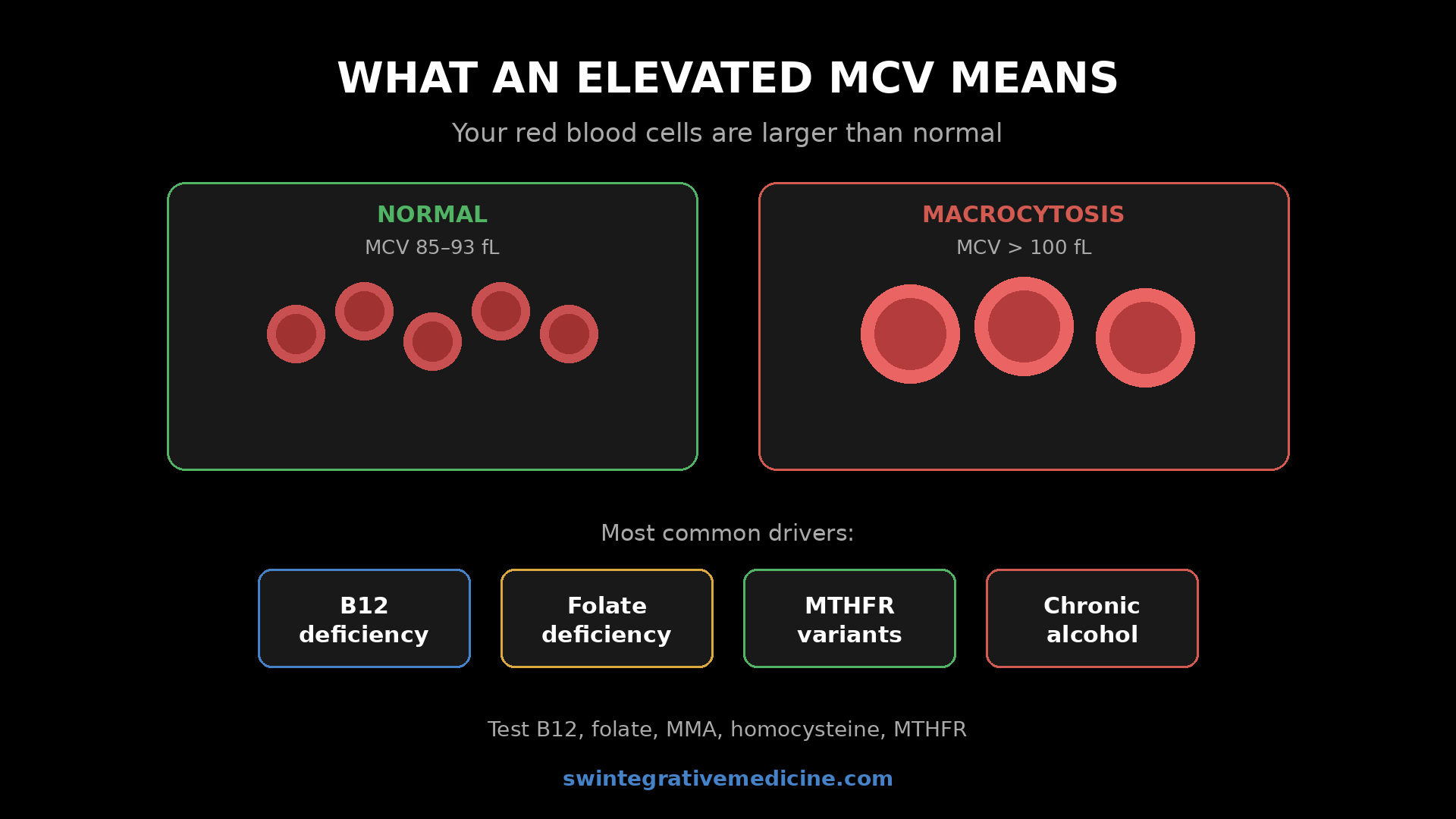
It's typically reported in femtoliters (fL), and the standard reference range is somewhere around 85 to 100. The optimal range I look for is closer to 90 or a little higher. Once it climbs above about 93, that's where it starts to be more of an indicator that there could be a problem with DNA production specifically — even if it's still inside the lab's "normal" range.
When MCV is elevated outside the normal range, the medical term is macrocytosis. Literally, large cells.
What Causes Elevated MCV?
The most common cause of macrocytosis is megaloblastic anemia. Megaloblastic anemia is characterized by impaired DNA synthesis, which results in red blood cells that are larger than normal. Because the cells are larger and the maturation process is impaired, you also end up with fewer total red blood cells — and that's where the anemia part comes from.
So why would DNA synthesis be impaired? The most common reasons:
Vitamin B12 or folate deficiency. These two nutrients are essential for the DNA production needed to mature red blood cells normally. If either is low, the cells are released into circulation while still oversized. This is the most common driver of an elevated MCV by a wide margin.
Genetic variants in folate or B12 metabolism. If you have an MTHFR mutation, or other single nucleotide polymorphisms (SNPs) that affect folate metabolism or B12 utilization, you can develop a functional deficiency even with adequate intake. Your labs may show "normal" B12 and folate, but at the cellular level you're not using them efficiently.
Increased excretion or impaired absorption. Some people lose B12 or folate faster than they take it in. GI conditions, certain surgeries, and gut absorption issues can drive this.
Most of the time it's a combination — some intake gap, some genetic factor, some lifestyle component. They stack.
The Alcohol Connection
The classic combination is chronic alcohol consumption. If you're consuming alcohol on a daily basis, you're commonly going to see macrocytosis on your CBC. It may not always reach a frank elevation outside the reference range, but the MCV will trend toward the higher side.
Why? Alcohol interferes with folate metabolism, utilization, and excretion — and does similar things to B12. The result is impaired production and full maturation of red blood cells. So more of them are released in that larger, less mature stage.
Here's an important practice observation: people with chronic alcohol-related elevated MCV often don't see their numbers correct just by supplementing folate and B12. There's something about the alcohol itself that interferes with utilization of those B vitamins beyond just depleting them. If your MCV is high and you drink daily, the most direct fix is reducing the alcohol.
Other Causes Worth Knowing
B12 and folate aren't the only reasons for an elevated MCV, though most other causes still tie back to them in some way. A few additional drivers:
Certain medications. Some drugs interfere with B12 or folate utilization directly. Methotrexate, certain anticonvulsants, metformin (long-term), and proton pump inhibitors are common ones. If you're on a long-term medication and noticing creeping MCV, this is worth looking at.
Other anemias. Hemolytic anemias and certain other red blood cell disorders can affect MCV.
Bone marrow disorders. Conditions affecting the bone marrow's ability to produce mature red cells can show up here. These are less common but worth knowing about.
Liver disease. Liver function impacts a lot of things including how the body handles B vitamins and red cell production. In some cases of liver disease the MCV will be elevated.
What To Do With An Elevated MCV
One important thing to understand: an elevated MCV alone is not a diagnosis. It's a signal that something deserves further investigation, not a verdict. Sometimes it'll be high on one test and look normal on the next. The body fluctuates.
That said, if you have a confirmed elevated MCV, the natural next-step blood tests to follow up with are:
Serum B12. Below 400 pg/mL is often functionally low even if it's "in range." Below 200 is overtly deficient.
Serum folate. Direct measurement of folate status.
Methylmalonic acid (MMA) and homocysteine. These are functional markers. They tell you whether B12 and folate are actually being used at the cellular level — sometimes the regular B12 and folate look fine but MMA or homocysteine reveal a hidden deficiency.
MTHFR genotyping. If you've never tested it and your MCV pattern fits, this is worth doing once.
From there, treatment depends on what you find. B12 supplementation in the right form (methylcobalamin and adenosylcobalamin are often better tolerated than cyanocobalamin in people with methylation issues), methylated folate, dietary changes, alcohol reduction, or addressing whatever underlying GI or medication issue is driving the loss.
Conclusion
An elevated MCV isn't a diagnosis on its own, but it's a useful clue. The most common cause is some combination of low B12, low folate, genetic variants in how those vitamins are used, and lifestyle factors like alcohol. Less commonly, medications, other anemias, bone marrow issues, or liver disease are driving it.
If you've spotted an elevated MCV, the right move is to follow up with B12, folate, and ideally MMA and homocysteine — and to consider MTHFR if you haven't tested it. These few tests will usually tell you what's going on and what the next step should be.
If you want a deeper guide on B12, including how the different forms work and what your labs are really telling you, check out my book "Don't B12 Deficient" (affiliate link). Or work with me directly to interpret your blood work and build a treatment plan.
Topics: MCV, Macrocytosis, B12 Deficiency, Folate, Megaloblastic Anemia, MTHFR, Blood Test Interpretation


