





What Causes High Homocysteine Levels?
Do you have ongoing elevations in your homocysteine levels? Maybe you're wondering what the heck could be causing this high homocysteine level. In this article we're going to look at all the causes of high homocysteine — the B vitamins and the medical conditions that can lead to high homocysteine levels.
What Homocysteine Is Actually Measuring
First off, homocysteine is a molecule in your blood that we use to measure the relative abundance or deficiency of things like B12, folate and B6. It can also be more of a reflection of your protein intake and your body's overall inflammation state.
So typically, if you're high in your homocysteine level, you're either consuming a bunch of protein or you're deficient in one of those three vitamins. And when you have a high homocysteine for a period of time, there are definitely consequences to that — problems that happen in the body.
B12 And Folate Deficiency
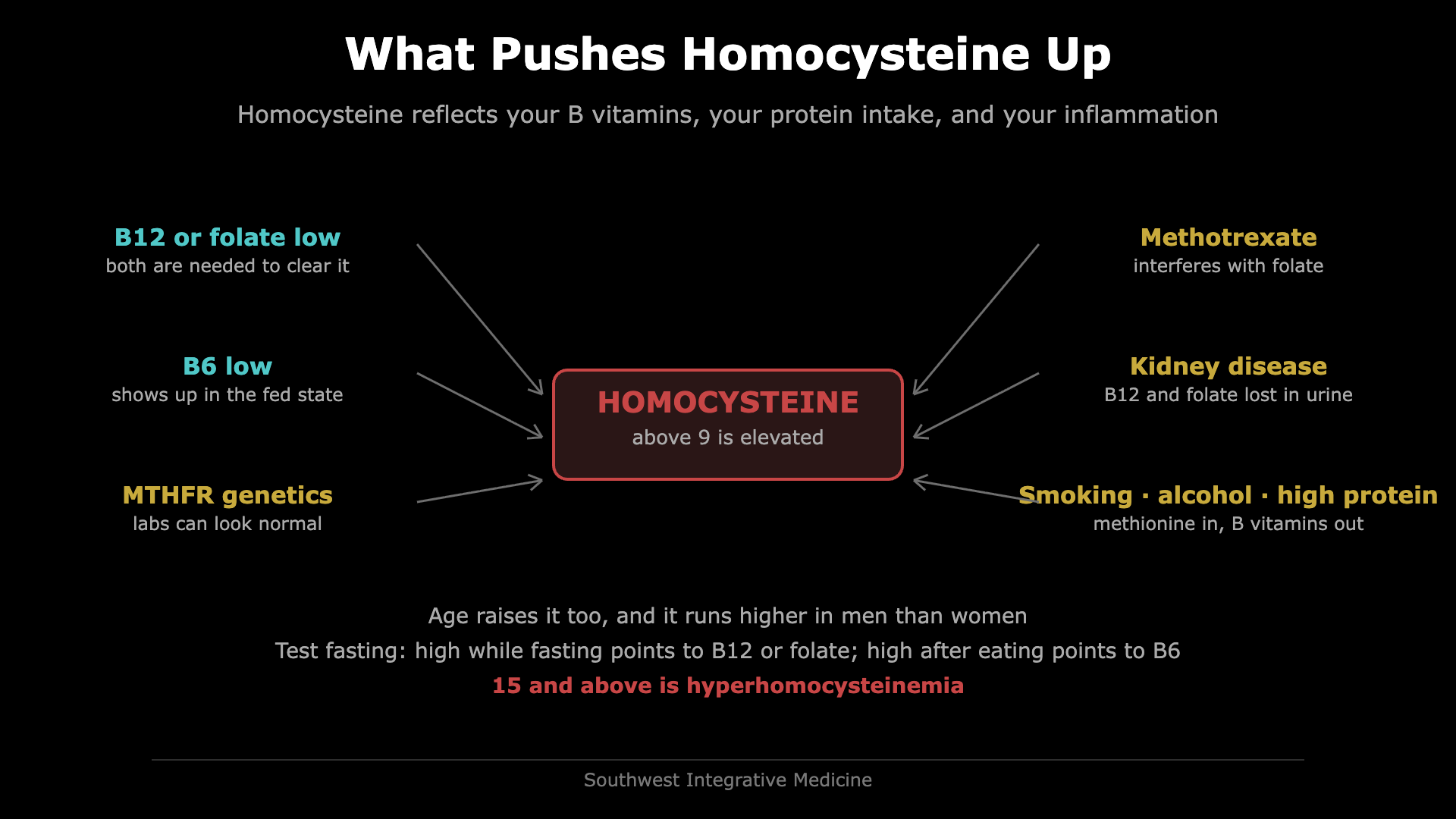
Both B12 and folate are needed to break down homocysteine and turn that homocysteine into methionine. If you don't have enough of one or both of those, then you end up with elevated homocysteine levels.
Genetics, Even Without A Deficiency
Sometimes there are genetic problems, even independent of deficiency, where your body is not making the conversion. There are problems with folate metabolism and B12 utilization that can lead to deficiencies independent of what the blood test shows.
So your blood test may show you look all good, you're in the normal ranges, but you still have a problem with high homocysteine. That's where you need to understand that sometimes genetic issues like MTHFR and other genetic alterations come into play.
Medications
Methotrexate and some other medications can also lead to high homocysteine. Methotrexate actually interferes with folate metabolism, so it makes sense that methotrexate could potentially raise your homocysteine levels.
Kidney Disease
Kidney disease and problems with the kidneys can also lead to elevated homocysteine levels, and this is thought to be related to losing B12 and folate through the urinary tract.
Lifestyle: Smoking, Alcohol, And High Protein Diets
Lifestyle factors like smoking, excessive alcohol consumption and high protein diets can also lead to elevations in homocysteine. Most of those are going to be tied in with folate and B12 deficiency.
The high protein diet in and of itself is going to contain methionine, so it can raise your homocysteine levels — because methionine is then turned back into homocysteine, and then it has to be turned back into methionine. So if you're consuming a lot of methionine-rich foods, which are animal protein, you may end up with higher homocysteine levels. (I went into that in more detail in diet's actual role in high homocysteine.)
Smoking has also been reported to cause elevated levels of homocysteine. And of course alcohol consumption depletes B vitamins like B12 and folate, and so that can also lead to high homocysteine levels.
Age And Sex
Homocysteine levels tend to increase with age, and it's also more common in men than women. The exact link there between age and male versus female is not fully understood.
B6 Deficiency — And Why Fasting Matters When You Test
I should also note that a deficiency in B6 can also lead to high homocysteine levels. And when you're measuring your homocysteine levels, you want to be in a fasting state to look at B12 and folate deficiency.
If it's elevated when you're in a fasting state, that means you're probably deficient in one or both of those. If it's elevating when you're in a fed state, that could be more of an indication of B6 deficiency.
What Counts As Elevated
When we say elevation here, I usually use the marker of anything above 9 would be considered elevated. But depending on how high it is will depend on the level of intervention, and also what kind of symptoms you have.
As it gets into the double digits like 12 and 15 — 15 is actually considered hyperhomocysteinemia, and that's when you see more serious problems from high homocysteine. I covered those in the health problems from high homocysteine.
If your homocysteine keeps coming back high and you want help finding which of these is driving it, schedule an appointment and we can work through the testing together.


